Most people apply for an Indonesian e-VoA (B1) thinking it’s one of the simplest visas - and technically, it is. But from what we’ve seen across many applications, the issue is not complexity. It’s how easily small mistakes are overlooked because the process feels “too simple.” Wrong uploads, mismatched details, or unclear travel intent rarely stop you from applying - but they can create problems later, especially when many applicants try to extend or re-enter.
This guide breaks down what you actually need to prepare for a B1 e-VoA in 2026, and what tends to go wrong in practice.
What is Indonesia e-VoA (B1)?
The B1 Visa on Arrival (VoA) - including its online version (e-VoA) - is designed for short-term entry into Indonesia. For more details, you may refer to Indonesia e-VoA (B1)
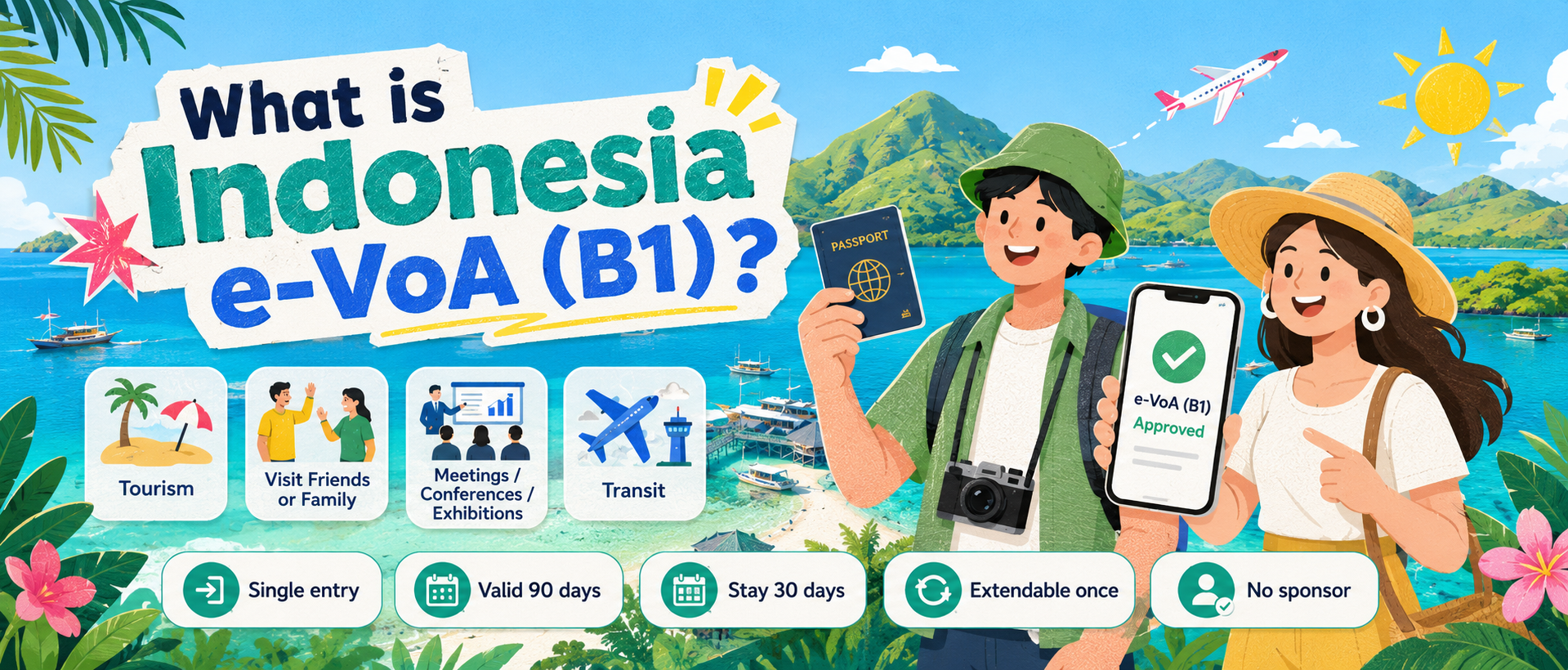
It is typically used for:
-
Tourism
-
Visiting friends or family
-
Attending meetings, conferences, and exhibitions (MICE)
-
Transit to another destination
From what we’ve seen, this is the most commonly used visa for destinations like Bali or Jakarta, especially for short trips.
Key characteristics:
-
Single entry
-
Valid for 90 days from issuance
-
Stay up to 30 days (extendable once, 30 days to 60 days total)
-
No sponsor required
Who Can Apply?
The B1 e-VoA applies to:
-
Citizens of 97 eligible countries
-
Travelers who are originally visa-exempt (A1) but want to stay longer (up to 60 days)
However, it does not apply to:
-
Stateless individuals
-
Travelers using non-standard travel documents (e.g., emergency passport)
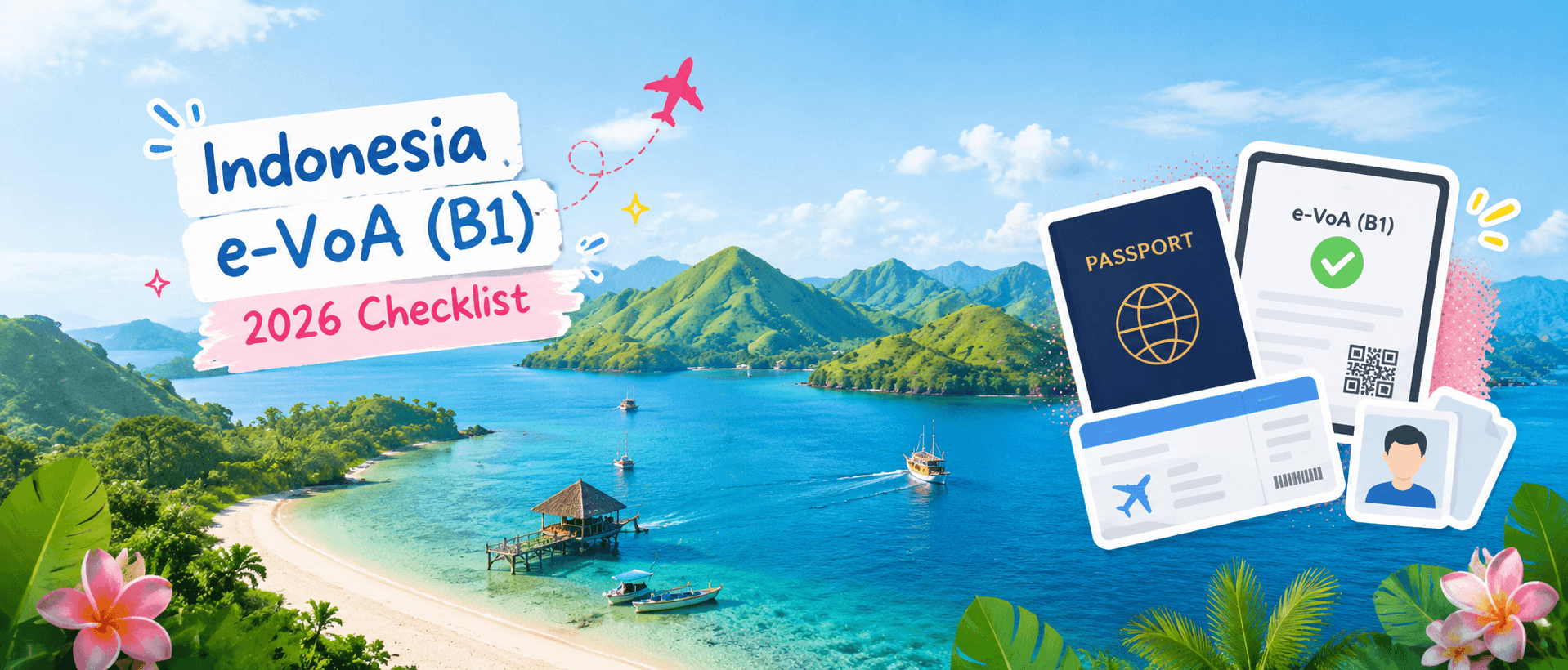
Indonesia e-VoA (B1) Checklist 2026
At a basic level, the document requirements are simple:
1. Passport
-
Valid for at least 6 months
-
Must be a standard national passport
2. Recent Photo
-
Clear, properly formatted
-
Used for identity verification in the system
3. Return or Onward Ticket
-
Proof that you will leave Indonesia
-
Can be a return flight or onward travel ticket
That’s it on paper. But in practice, this is where most issues start.
What Often Goes Wrong, Even With “Simple” Documents
From what we’ve seen across many cases, problems rarely come from missing documents, but from how they are submitted.
Some common issues include:
-
Passport upload errors: cropped edges, glare, or unreadable MRZ make system fails to auto-fill correctly.
-
Inconsistent travel details: ticket dates don’t align with intended stay.
-
Incorrect personal information from auto-fill: system extracts wrong data, yet user doesn’t double-check
-
Unclear travel purpose: especially when combining tourism with meetings/events
These are small details, but they affect how your application is processed and how it is interpreted later.
How the Application Process Works
There are three ways to obtain B1, but from a practical perspective, the e-VoA (online) is the most controlled option.
1. Apply online before arrival (recommended)
-
Submit via official platforms
-
Upload documents
-
Pay online
-
Receive e-VoA within ~24 hours
2. Apply online, pay on arrival
-
Submit in advance
-
Complete payment at the airport
3. Apply directly on arrival
-
Pay and process at immigration
-
Less predictable, more waiting time
From what we’ve seen, applying online in advance reduces friction - but only if everything is submitted correctly from the start.
Important Details Many Travelers Overlook
A few technical points that often create confusion:
-
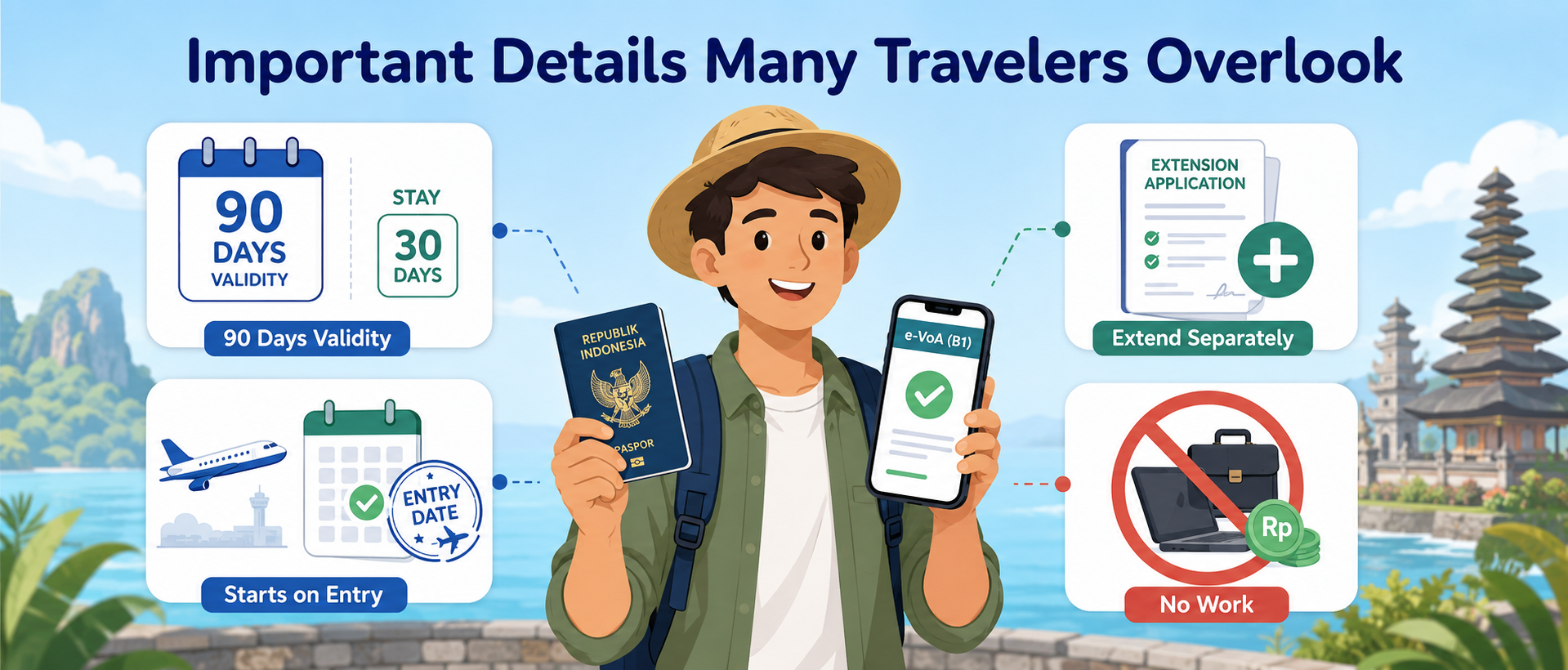
Visa validity ≠ length of stay: 90 days validity is the window to enter, not to stay.
-
Stay starts from entry date, not approval date.
-
Extension is not automatic: must be applied for separately.
-
Activities are restricted: no working, no earning income in Indonesia.
These are not always obvious when applying, but they directly affect your trip after arrival.
A Practical Consideration and How We Support Your Application
From what we’ve seen, many travelers treat B1 as a “quick step” in the process.
But in reality, this visa often sets the foundation for everything that happens after - whether you can extend easily, whether your stay aligns with your plan, and whether your documents remain consistent throughout. Because of that, even for a simple visa like B1, a second layer of review can help catch issues that are not immediately obvious.
Instead of focusing only on speed, our approach is to make sure your application is clear, consistent, and aligned from the beginning.
In practice, this includes:
-
Reviewing document quality before submission
-
Checking consistency across passport, ticket, and personal details
-
Verifying eligibility and entry conditions
-
Supporting the full process from submission to approval
For travelers who prefer not to manage the process themselves, we can also handle the application from A to Z - ensuring accuracy without adding unnecessary complexity.
The Indonesia e-VoA (B1) is one of the most accessible visa options available. But its simplicity is also why mistakes are often overlooked.
In practice, a smooth trip is not just about getting a visa approved - it’s about making sure everything works as expected after you arrive. If you want to avoid avoidable issues, you can contact us before applying. A quick review at the right stage can help you move forward with more clarity and fewer surprises.