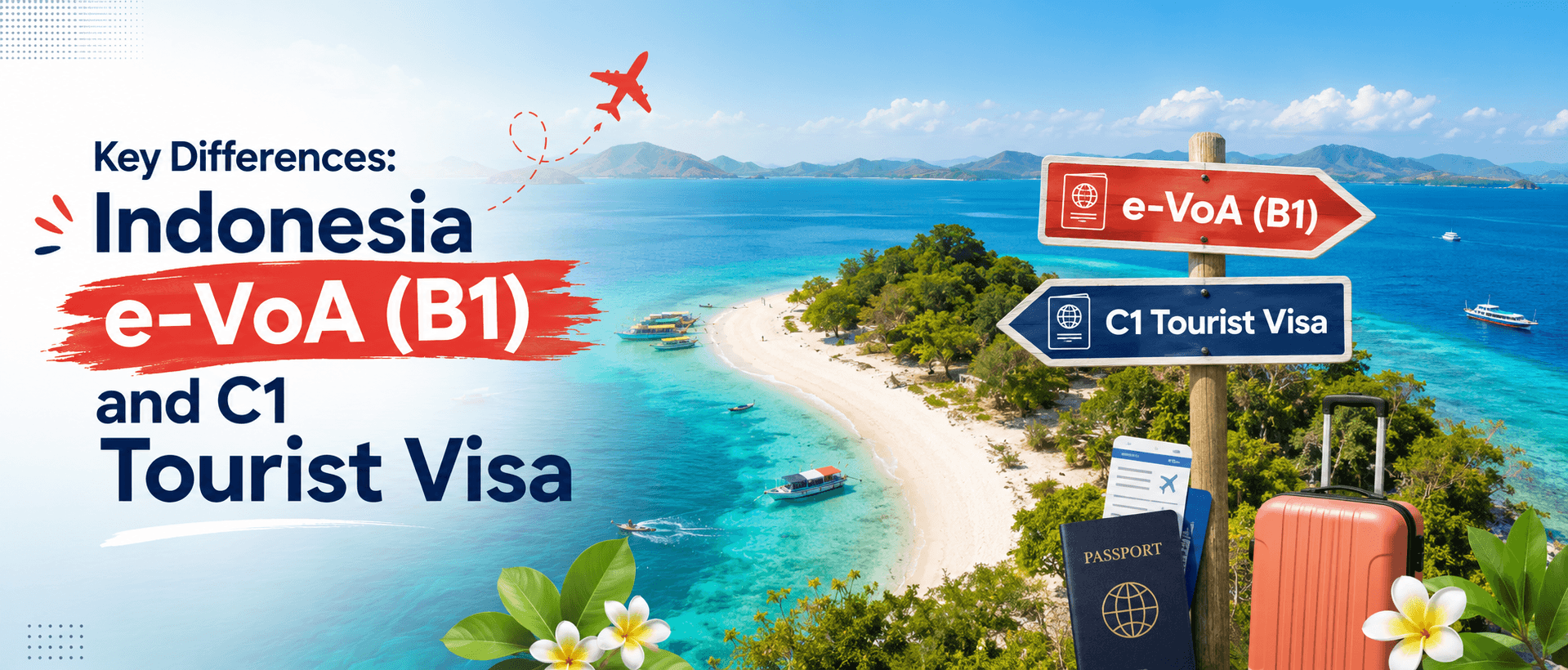
For most travelers planning a trip to Indonesia, the confusion does not come from whether a visa is required, but from which type of visa actually fits their plan. At first glance, options like e-Visa on Arrival (B1) and the C1 Tourist Visa may seem similar - they both allow tourism, short visits, and entry into Indonesia. However, in practice, choosing the wrong type can affect how long you can stay, whether you can extend your visa, and how flexible your travel plan can be.
This article focuses on what these two visa types really mean, how they differ in practical use, and which one makes more sense depending on your situation.
What Is Indonesia e-Visa on Arrival (B1)?
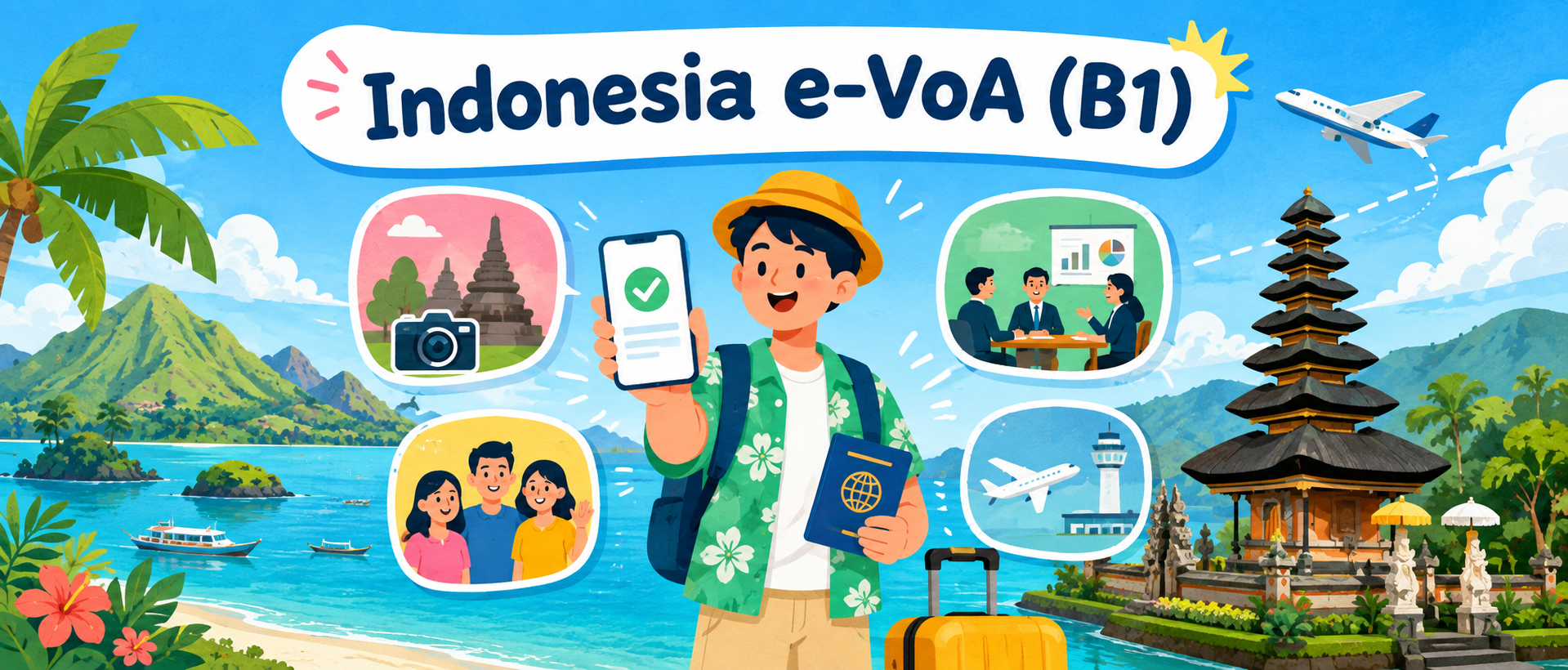
The e-Visa on Arrival (B1) is designed for short-term visits and is one of the most commonly used options for travelers entering Indonesia.
It can be obtained upon arrival or applied online in advance (e-VoA), which helps reduce waiting time at the airport. The key idea behind this visa is convenience and accessibility, especially for short and straightforward trips.
In practice, this visa is commonly used for:
-
Tourism and sightseeing
-
Visiting friends or family
-
Attending short events, meetings, or conferences
-
Transit through Indonesia
One important detail is that this visa is not available to all nationalities. It applies to around 97 eligible countries, and in some cases, travelers who are eligible for visa exemption (A1) but wish to stay longer (up to 60 days) may also choose this option.
While it is easy to obtain, the trade-off is that it is more limited in duration and flexibility compared to other visa types.
What Is the C1 Tourism Visitor Visa?
The C1 Tourism Visitor Visa is also an electronic visa (eVisa), but it is designed for travelers who need a longer stay or a more structured travel plan.
Unlike B1, this visa is applied for fully online before travel and allows for a longer initial stay without relying on the “arrival-based” process.
In practice, the C1 visa covers a broader range of activities, including:
-
Tourism and sightseeing
-
Personal development activities
-
Cruise travel or extended trips
-
Attending events (MICE)
-
Visiting friends or relatives
Another key difference is eligibility scope. The C1 visa is available to a much wider range of applicants (up to 189 nationalities), making it more accessible globally compared to B1.
More importantly, it allows travelers to stay up to 60 days without extension, and can be extended further depending on the case.
e-VoA (B1) vs. C1 Visa: What Really Matters
On paper, both visas may look similar. However, from a practical perspective, the differences become clearer when you look at how they are used:
|
Criteria |
e-VoA (B1) |
C1 Tourist Visa |
|
Application |
On arrival or online |
Fully online (eVisa) |
|
Eligibility |
~97 countries |
~189 countries |
|
Stay duration |
30 days |
Up to 60 days |
|
Extension |
Extend once (60 days total) |
Extendable up to 180 days |
|
Flexibility |
Limited |
Higher |
|
Best for |
Short, simple trips |
Longer or structured stays |
The important point is that the choice is not about which visa is “better,” but which one fits your actual travel duration and flexibility needs.
When Should You Choose e-VoA (B1)?
The e-VoA works best when your trip is short and predictable.
You may consider this option if:
-
Your stay is within 30 days (or up to 60 days with one extension)
-
Your travel plan is simple (e.g., Bali holiday, short visit)
-
You want a faster and more convenient entry process
From what we have seen, this is the most common choice for travelers who prioritize ease and speed over flexibility.
When Does the C1 Visa Make More Sense?
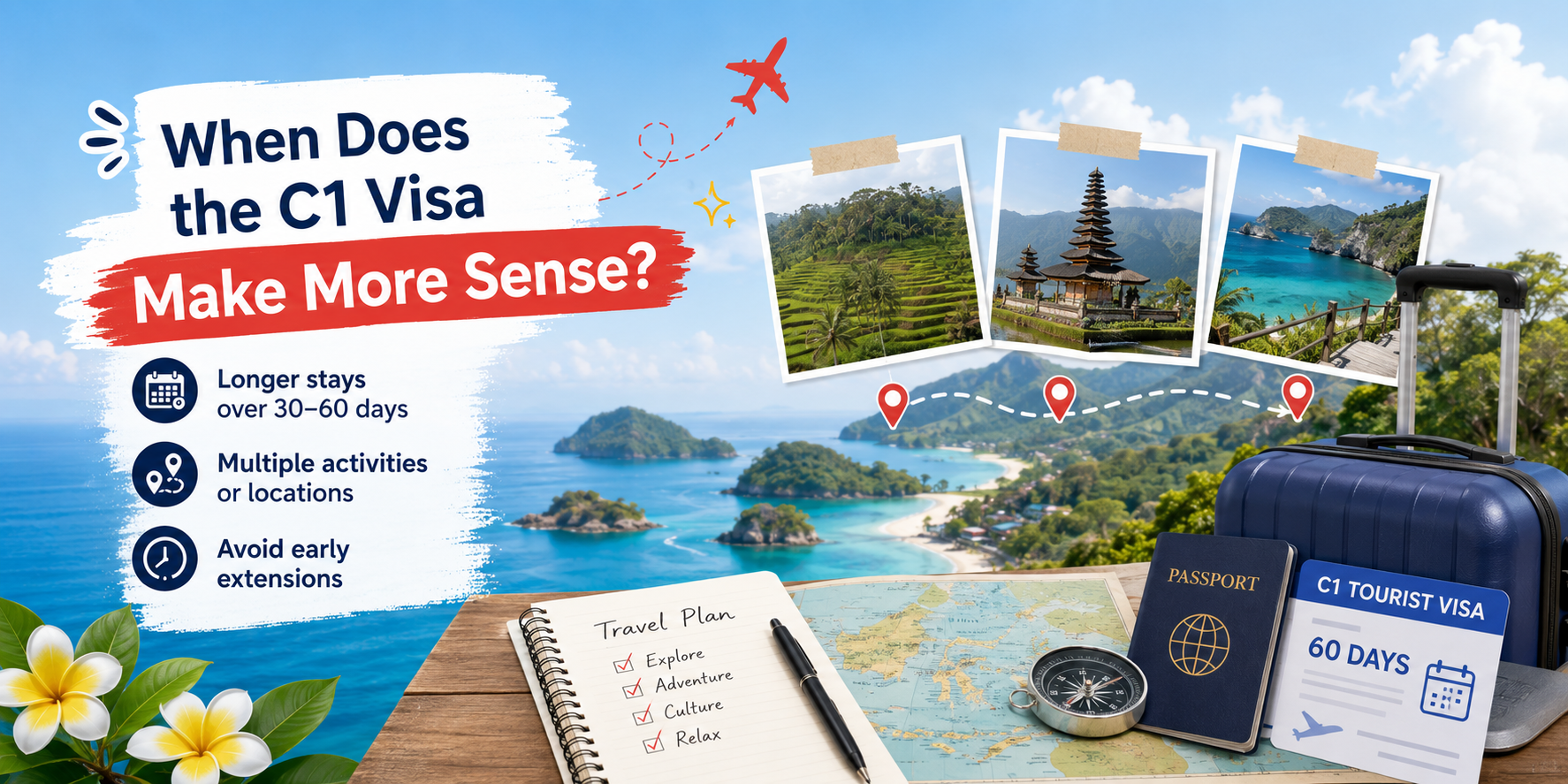
The C1 visa becomes more relevant when your travel plan is longer or less fixed.
You may consider this option if:
-
You plan to stay longer than 30–60 days
-
Your itinerary involves multiple activities or locations
-
You want to avoid the need for immediate extension after arrival
In practice, one key advantage is that you already have 60 days from the start, which reduces the need to manage extensions early in your trip.
A Practical Detail Many Travelers Overlook
One important difference that is often overlooked is how initial stay duration affects your experience after arrival.
For example, while both visas allow extension, starting with only 30 days (B1) means you may need to plan for extension relatively early. In contrast, the C1 visa gives you more time upfront, which can make your trip more flexible and less administrative.
Because of this, choosing the right visa is not just about entry - it directly affects how comfortable your stay will be.
Final Thoughts
At a glance, e-VoA (B1) and C1 Tourist Visa may seem interchangeable. However, in practice, they are designed for different types of travel experiences. If your trip is short and straightforward, e-VoA is often sufficient. But if your plan involves a longer stay or requires more flexibility, the C1 visa is usually the more suitable option.
If you’re unsure which option fits your travel plan, you can contact us for support before applying. Choosing the right visa early can help you avoid unnecessary adjustments later.